How to Actually Get Over Step Aerobics Choreography Anxiety
Quick Answer: Choreography anxiety fades fastest by standing near the back or side (not the front), simplifying your own steps when lost rather than freezing, and accepting that even regulars miss beats — consistency across a few classes matters far more than nailing routines immediately.
The moment everyone else flows into a combo and you’re still processing the last move is one of the most common reasons people quit step aerobics in the first month. It’s also one of the most fixable problems in group fitness — the anxiety fades faster than the actual choreography skill does.
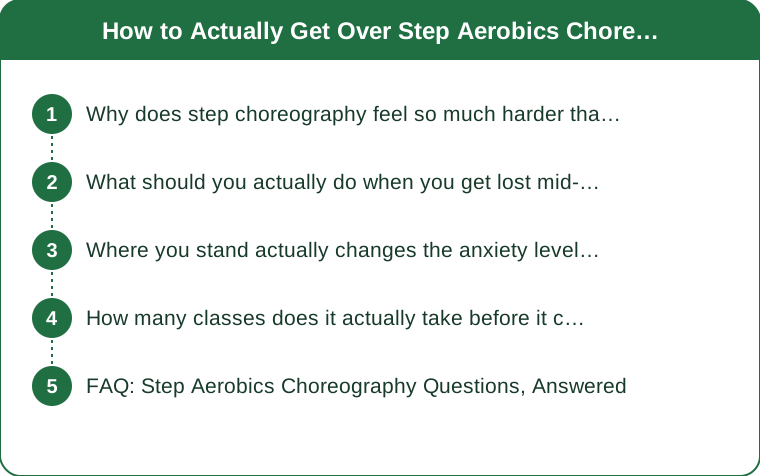
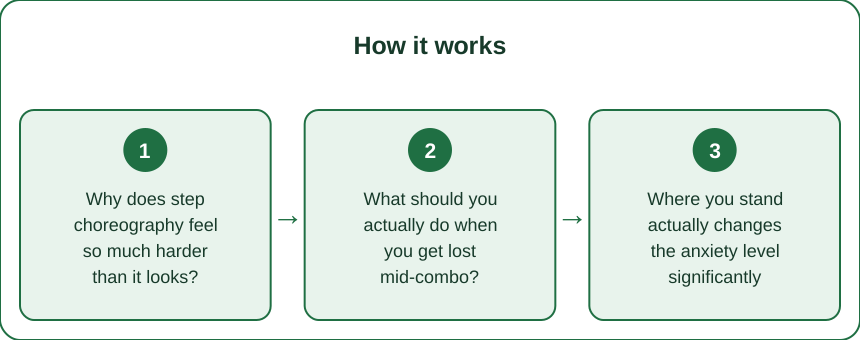
Why does step choreography feel so much harder than it looks?
Step aerobics stacks multiple simultaneous demands — foot pattern, step direction, arm movement, and rhythm — and new students are consciously processing all four at once, while regulars have automated most of it after repeated exposure to common combo patterns. This isn’t a coordination deficit; it’s simply an earlier stage of the same learning curve everyone in the room already went through.
What should you actually do when you get lost mid-combo?
Simplify immediately rather than stopping or freezing — march in place on the step’s base rhythm, keeping your body moving with the music, until the next recognizable cue arrives. This keeps you in the flow of the class and burns real calories the whole time, instead of the stop-start pattern that actually draws more attention than a simplified step would.

Where you stand actually changes the anxiety level significantly
Standing in the back row or off to the side gives you sightlines to several other students’ feet, not just the instructor, which makes pattern-matching easier — and it removes the feeling of being watched that the front row amplifies. Most step aerobics regulars started in the back for exactly this reason.
How many classes does it actually take before it clicks?
Most step instructors and long-time students report a noticeable shift by the 4th-6th class, once foot patterns and common combo building blocks start feeling familiar rather than brand new each time. Choreography anxiety in class 1 is not predictive of how class 6 will feel — it’s an early-curve problem, not a permanent one.
FAQ: Step Aerobics Choreography Questions, Answered
Is it normal to feel behind the whole first few classes?
Completely normal — nearly every regular in the room went through the same adjustment period, even if it’s not visible from the outside.
Should beginners stand in the front or back of a step aerobics class?
Back or side is generally easier for beginners — more sightlines to follow, and less feeling of being watched while still learning.
What should I do if I keep losing the beat entirely?
Drop to a simple step-touch on the base platform to stay in rhythm with the music until you can re-enter the combo — staying moving matters more than getting every step technically right early on.
TL;DR:
- Choreography anxiety is an early-curve problem, not a coordination deficit
- Simplify to a base step when lost instead of freezing — stay moving
- Standing back or side gives more sightlines and less feeling of being watched
- Most people report it clicking by class 4-6, not class 1
Everyone currently flowing through the routine started exactly where you are now — the anxiety fades faster than most people expect.
Keep Reading
This article is for general informational and styling purposes only. Fit, sizing, and product availability may vary.