Why Step Aerobics Hurts Your Shins More Than Running Does
Quick Answer: Step aerobics repeatedly loads your shin’s dorsiflexor muscles (the ones that lift your toes toward your shin) every time you step up and control your foot back down, at a rate and repetition running rarely matches. That specific, repetitive muscle demand — not impact — is usually what’s behind the shin ache.
Running’s impact is often blamed for shin splints, but step aerobics has comparatively low impact. The ache comes from a completely different mechanism: constant controlled foot-lifting, not landing force.
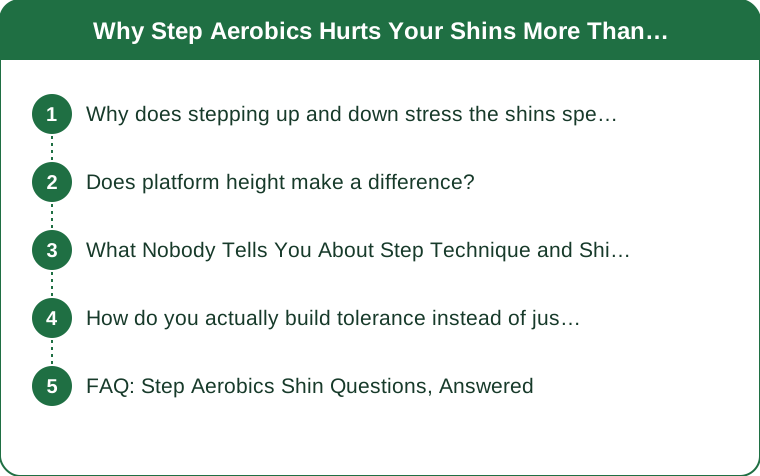
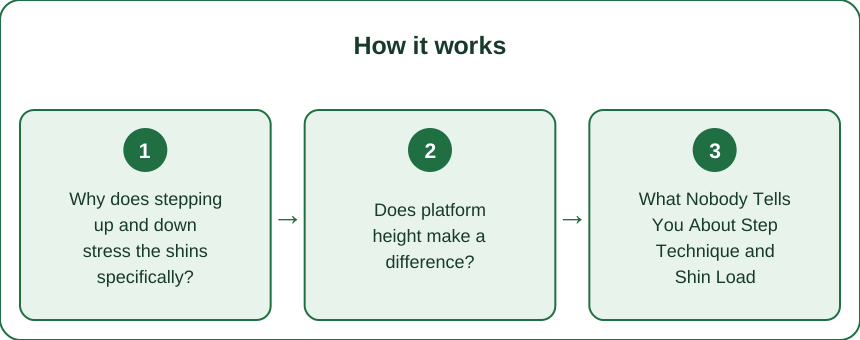
Why does stepping up and down stress the shins specifically?
Every step-up requires your anterior tibialis (front shin muscle) to lift your toes and control your foot’s placement on the platform, and every step-down requires the same muscle to control your foot’s descent so it doesn’t slap down. Repeated dozens of times per minute for a 30-45 minute class, this adds up to far more dorsiflexor repetitions than most running sessions produce.
Running uses this muscle too, but far less intensively per stride — most of running’s impact loads the calf and Achilles instead, which is why runners can be fine on shins that step aerobics fatigues quickly.
Does platform height make a difference?
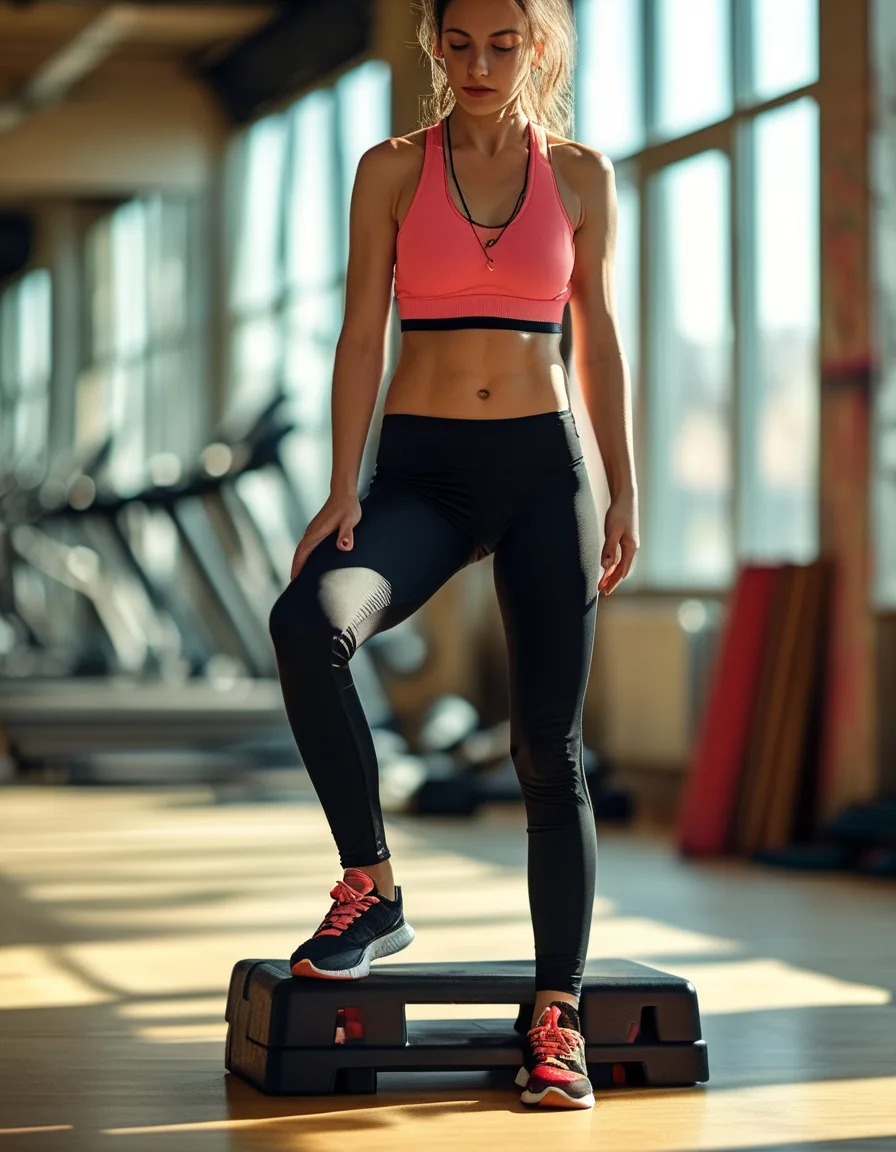
Significantly. A higher platform increases the range of motion your shin muscles have to control on both the way up and the way down, multiplying the workload per step. Beginners often start on a platform height suited to more experienced steppers and end up overloading the shin muscles before they’ve built up tolerance.
Dropping platform height by even one riser (roughly 2 inches) for the first several classes gives the anterior tibialis time to adapt without the discomfort.

What Nobody Tells You About Step Technique and Shin Load
Here’s the detail most instructors don’t emphasize: slapping your foot flat onto the platform instead of rolling through it heel-to-toe dramatically increases shin strain, because a flat-foot slam skips the controlled muscular deceleration and instead relies on impact to stop the foot’s downward motion.
Focusing on a quiet, controlled foot placement — sound matters here, a loud step is almost always a mechanically harder one on the shins — reduces the load significantly without changing anything else about the workout.
How do you actually build tolerance instead of just pushing through?
Start with lower platform height and shorter class duration, adding both back gradually over 3-4 weeks as the anterior tibialis strengthens. Off the platform, calf raises and toe-taps (lifting just your toes while heel stays down) 2-3 times a week directly strengthen the exact muscle step aerobics is testing.
If shin pain is sharp, localized to bone rather than muscle, or persists at rest, that’s a different issue — a possible stress reaction — and worth seeing a professional rather than adjusting technique alone.
FAQ: Step Aerobics Shin Questions, Answered
Is step aerobics bad for shin splints in general?
Not inherently — the ache is usually adaptation-related for new or platform-height-mismatched steppers, and typically resolves as the anterior tibialis strengthens with consistent, appropriately-scaled practice.
Should I switch to running instead if step aerobics hurts my shins?
Not necessarily — running loads different structures and carries its own injury patterns. Scaling step aerobics appropriately usually resolves the issue without needing to switch workouts entirely.
How long until shin discomfort from step aerobics goes away?
Most people notice meaningful improvement within 3-4 weeks of starting at a lower platform height and progressing gradually, alongside some direct anterior tibialis strengthening work.
TL;DR:
- The shin ache comes from repetitive dorsiflexor muscle work, not impact — a different mechanism than running-related shin pain
- Higher platforms multiply the range of motion your shin muscles must control per step
- A quiet, controlled foot placement reduces shin strain far more than avoiding the workout
- Start lower and shorter, add toe-taps and calf raises, and give it 3-4 weeks to adapt
Scale the platform to your current shin strength, not the class average, and the ache fades as that muscle catches up.
Keep Reading
This article is for general informational and styling purposes only. Fit, sizing, and product availability may vary.