Step Workouts at Home: The Platform, the Moves and the 20-Minute Sessions
Step aerobics’ revival runs on a simple truth — the platform turns any living room into a cardio studio with built-in progression — and the home version needs one purchase and a move vocabulary. The home-step guide: the setup, the moves and the sessions.
The Setup
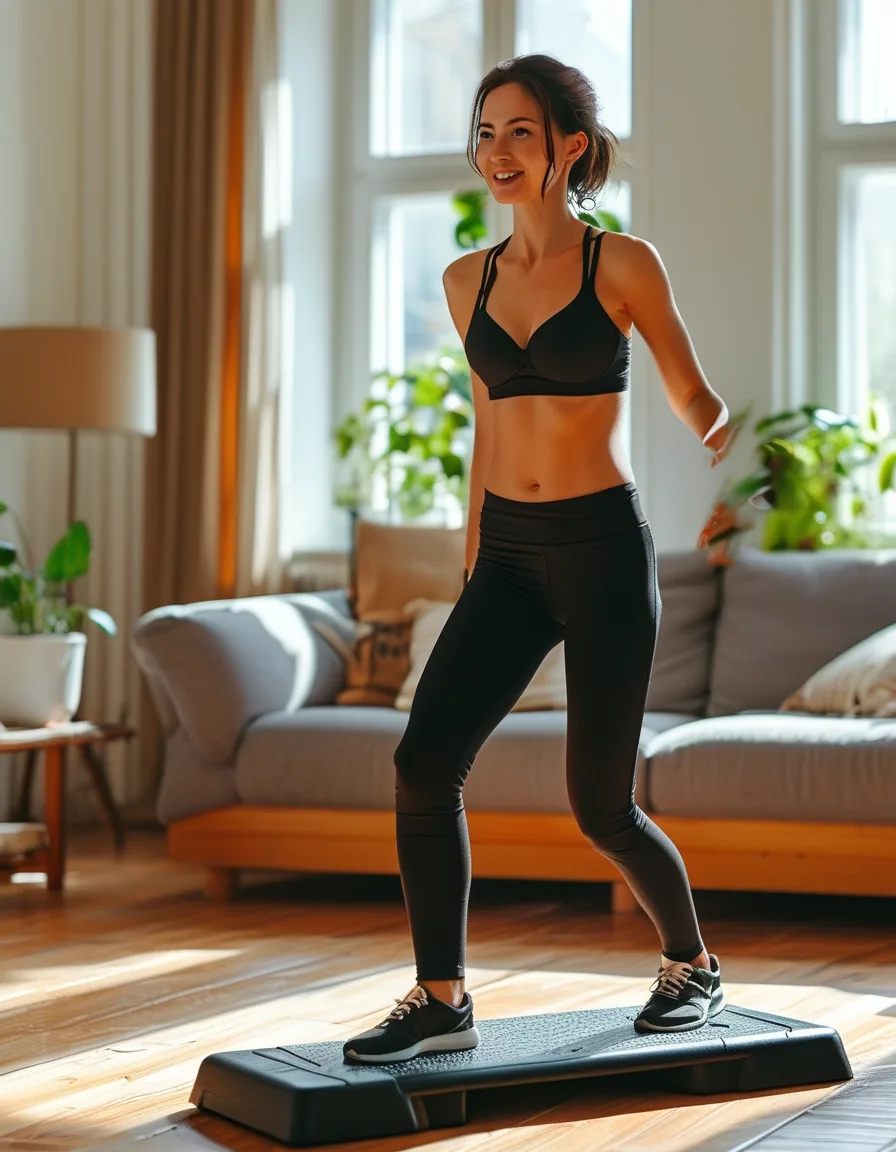
The platform and the space: the step selection (the adjustable-riser platforms as the standard — the 4-6-8 inch heights being the progression system; the width-and-grip checks: the non-slip surface and the stable-under-hop test per the gear doctrine; the budget honesty: the solid mid-tier outlasting the flimsy cheap), the height rules (the beginner at the lowest setting — the knee-angle check: the stepping knee at or below 90 degrees; the height progressed AFTER the choreography, never with it per the progression doctrine), the space-and-floor notes (the platform-plus-arm-span footprint — the mat-under option for floors and neighbors per the apartment doctrine; the ceiling check for the taller), the shoe requirement (the supportive trainers being non-negotiable — the lateral-support need from the shoe doctrine; the barefoot-step being the twisted-ankle recipe), and the music infrastructure (the 120-130 BPM playlists — the step’s tempo tradition from the playlist doctrine; the video-class ecosystem: the free-and-subscription step libraries).
The Move Library
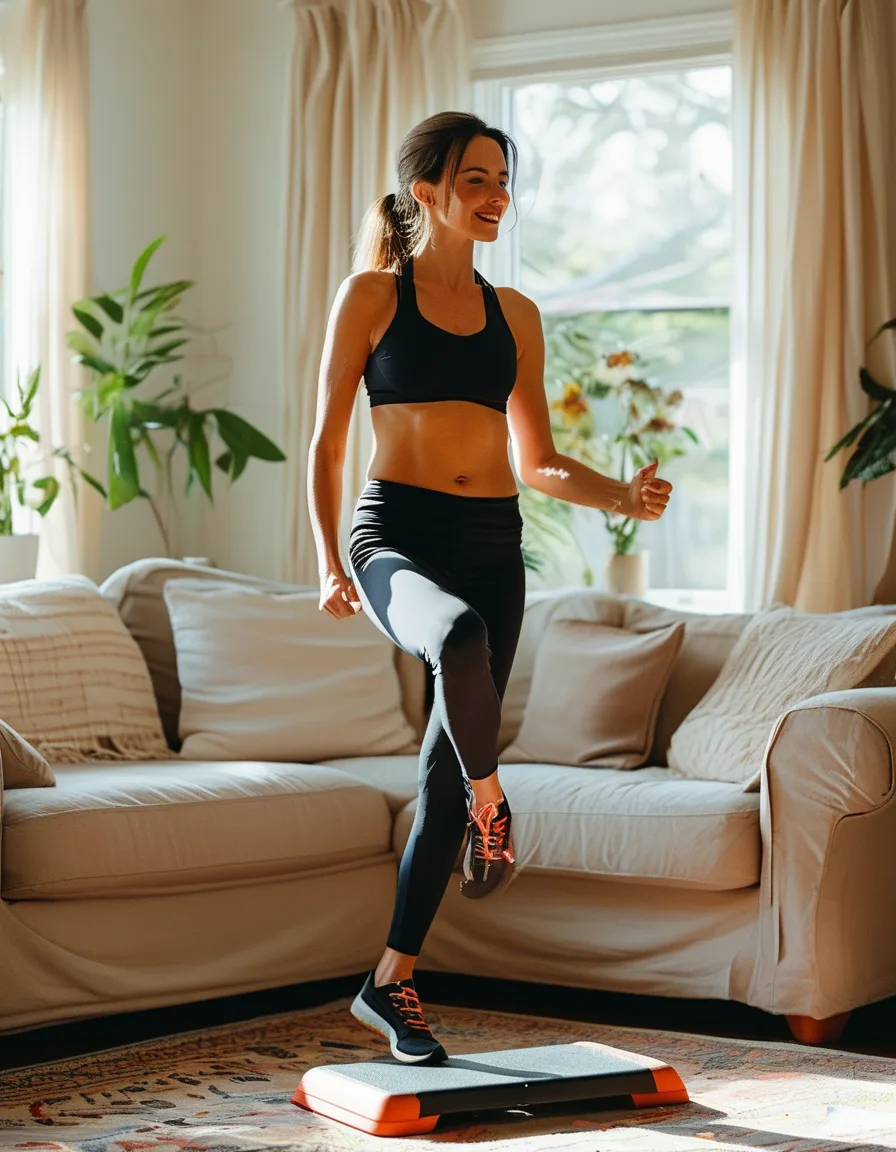
The vocabulary: the basic step (the up-up-down-down foundation — the full-foot-on-platform law: the heel-hang being the injury source per the technique doctrine; the lead-leg switching that saves knees), the V-step (the wide-up narrow-down pattern — the hip-and-glute widener), the knee-lift family (the step-up-knee-raise and its kicks-and-curls cousins — the balance-and-core bonus per the balance doctrine), the turn step (the direction-changing basic — the spatial-awareness builder), the over-the-top (the sideways platform crossing — the lateral pattern from the agility doctrine), the repeater (the three-count knee pulses — the single-leg burner), the tap-and-lunge tier (the platform-assisted lunges and taps — the strength flavor per the leg doctrine), and the learning method (the one-move-per-session addition — the moves drilled slow BEFORE tempo; the choreography chunked per the skill doctrine; the trip-and-laugh clause from the dance doctrine).
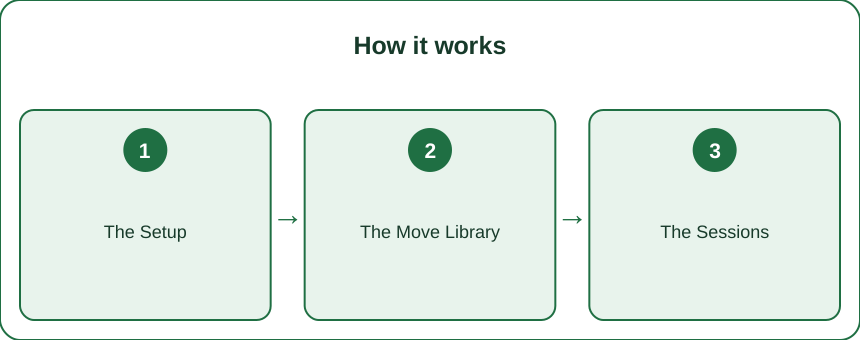
The Sessions
Structured by level: the beginner 20 (the 5-minute march-and-basic warm-up, the 12 minutes alternating basic-V-and-knee blocks at low height, the 3-minute cool-down — the pattern-learning phase per the beginner doctrine), the intermediate combo session (the 25-30 minutes with combinations — the four-move sequences repeated to music; the choreography-as-cardio: the brain-and-body double from the brain doctrine), the interval version (the 30-seconds-hard-30-easy step intervals — the tempo-and-power steps against recovery marches from the interval doctrine; the height NOT raised for intensity: the pace-and-arms raised instead), the strength-hybrid session (the step-plus-dumbbell circuits — the platform as the step-up-and-lunge station from the leg doctrine; the cardio-strength alternation), the weekly placement (the two-three step sessions in the cardio slots — the impact accounting: the step being moderate-impact per the impact doctrine; the joint-sensitive keeping heights low and days spaced), the progression ladder (the choreography first, the tempo second, the height third — the one-dial law from the progression doctrine), and the closing pitch (the platform as the under-fifty-dollar home-cardio studio — the moves that compound into flow; the retro revival earning its comeback per the revival doctrine; the living room, elevated four inches at a time). Lowest height first, full foot always, choreography before inches: the step, homed.
One adjustable platform makes the living room a cardio studio: start at the lowest height with supportive shoes, learn basic-V-knee moves slow before tempo, and progress choreography first, tempo second, height LAST. Full foot on the platform always — the heel-hang is the injury source.
Keep Reading
This article is for general informational and styling purposes only. Fit, sizing, and product availability may vary.