Why the Arm Patterns, Not the Legs, Are What Exhaust You in Step
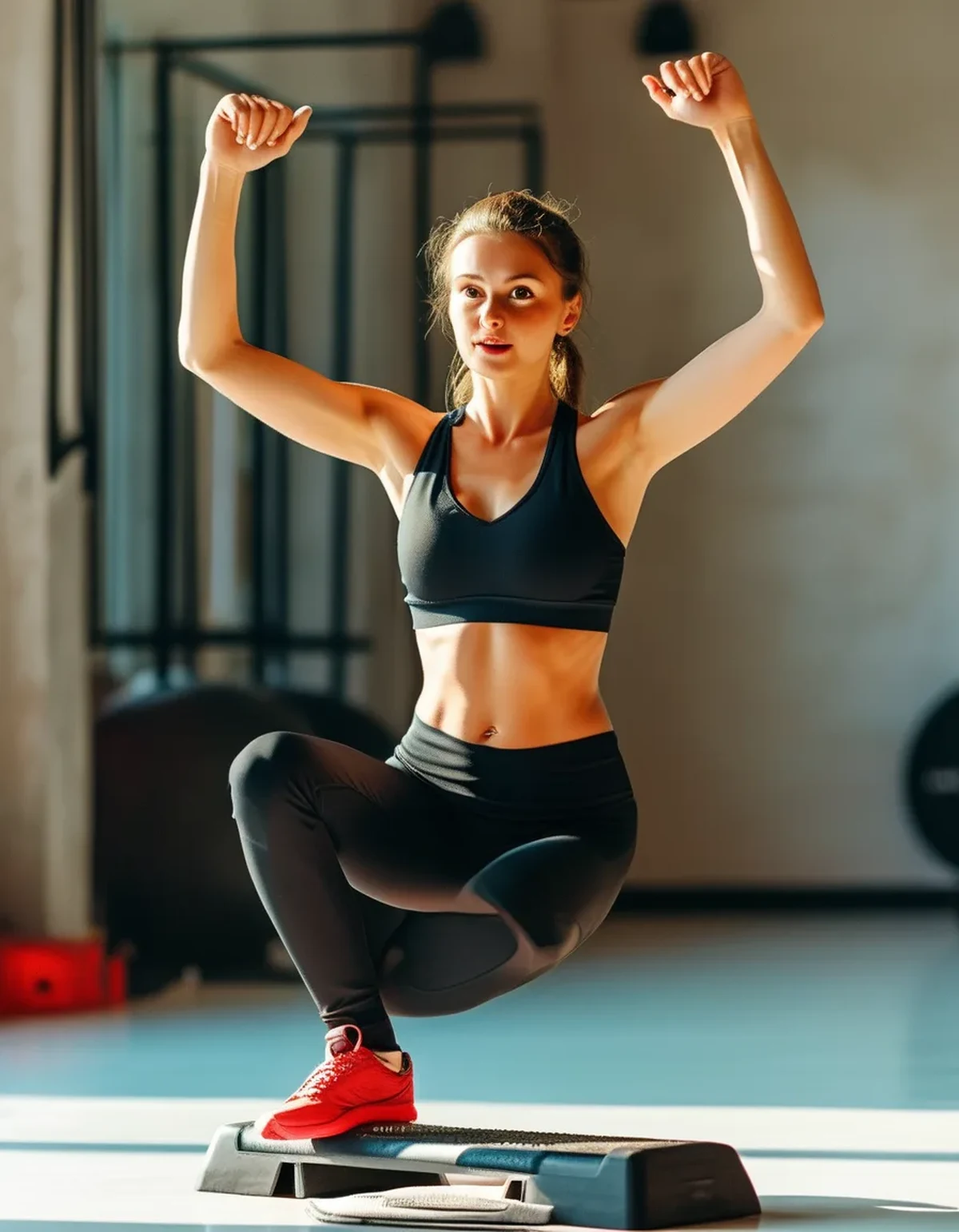
Quick Answer: Raising your arms above your head sharply increases cardiovascular demand for the same leg work. Overhead arm work raises heart rate by roughly 10 to 20 beats per minute, because small upper body muscles are less efficient, the heart works harder to pump blood above its own level, and it adds a coordination load on top. In step class the arms are the intensity dial, which is why the same choreography can be easy or brutal.
This is also the easiest thing to change if a class is too hard or too easy.
This blog has covered why step aerobics makes your calves sore but not your quads, why changing your riser count changes the workout, and why the choreography still trips you up. Arms are the lever nobody mentions.
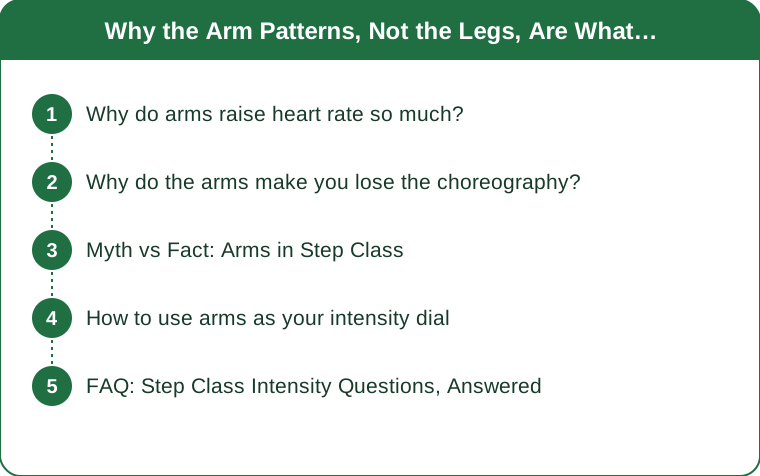
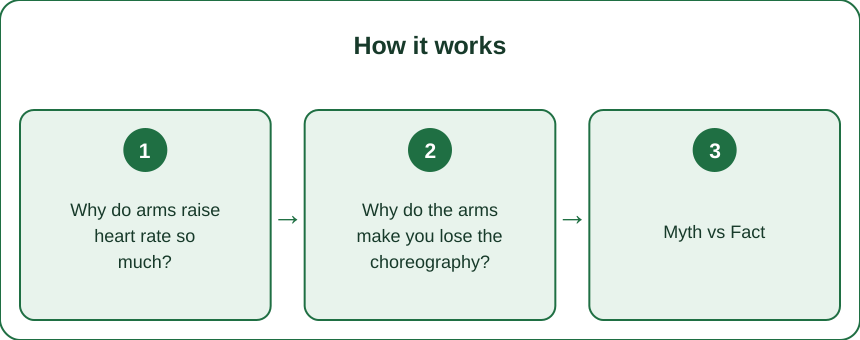
Why do arms raise heart rate so much?
Three separate mechanisms, and they stack.
Upper body muscles are smaller and less efficient at extracting oxygen than the large muscles of the legs, so the same work costs more cardiovascularly.
Working above heart level increases the pressure demand on the heart. Pumping blood upward against gravity to raised arms raises both heart rate and blood pressure noticeably.
Arm work adds a pressor response — a reflexive rise in blood pressure and heart rate associated with sustained small-muscle contraction — which is disproportionate to the actual energy cost.
Overhead work at moderate intensity commonly adds 10 to 20 beats per minute compared to the same lower body movement with arms down.
And coordination has a cost too. Performing an unfamiliar arm pattern alongside a leg pattern raises perceived exertion substantially even when the physical demand has not changed.
Which means heart rate in a step class is a poor guide to leg work. You can hit a high heart rate with modest leg effort, which is fine for cardiovascular training and misleading if you are trying to gauge intensity.
Why do the arms make you lose the choreography?
Because coordinating two limb patterns is a genuinely harder cognitive task than either alone.
Dual-limb coordination requires more working memory than a single pattern, and working memory is finite and easily overwhelmed.
Most people can hold either the footwork or the arms, not both, until each is automatic enough to run without attention.
Which is why the standard advice is right: learn the feet first. Arms added before the footwork is automatic reliably breaks the footwork.
Instructors cue arms as an option for exactly this reason, and dropping them is not scaling down — it is a valid version of the class.
Automaticity develops with repetition, typically over several classes with the same pattern, after which the arms genuinely stop costing attention.
And fatigue reverses this. In the last third of a class, coordination degrades and arms are the first thing that should go, not the last thing you cling to.
Myth vs Fact: Arms in Step Class
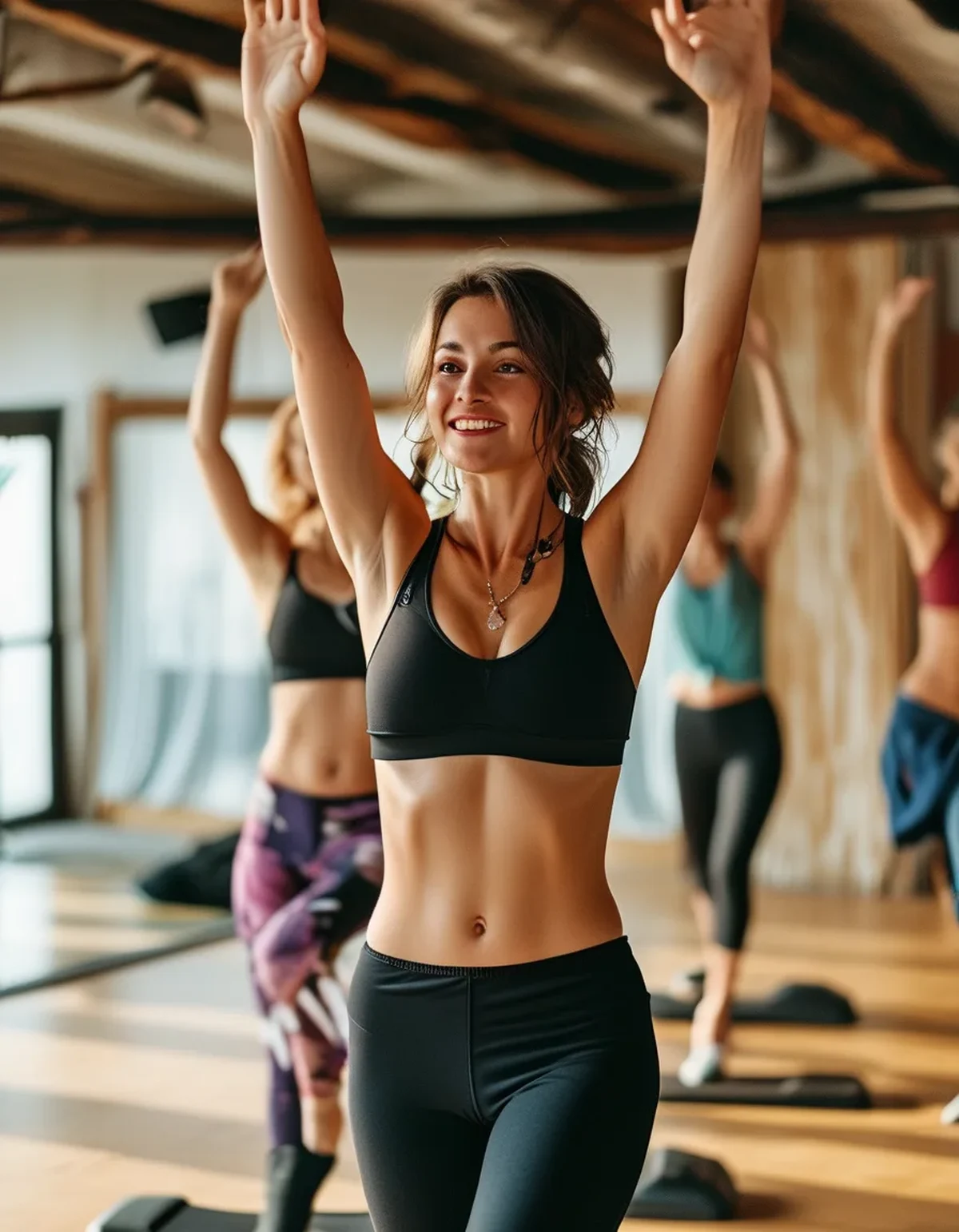
Myth: Dropping the arms means you are not working hard enough. Fact: It means you have moved intensity from small upper-body muscles to the large lower-body muscles doing the actual work. That is a legitimate and often better training choice, particularly when learning choreography.
Myth: Arm movements build upper body strength. Fact: Unweighted arm patterns provide almost no strength stimulus. They raise heart rate and add coordination demand. If you want upper body strength, that is a separate session with actual load.
Myth: Light hand weights make step a strength workout. Fact: Light weights in fast repetitive arm patterns provide minimal strength stimulus and raise shoulder joint stress considerably, particularly at speed and at end range. Most instructors have moved away from them for good reason.
Myth: Higher heart rate always means a better workout. Fact: Heart rate reflects cardiovascular demand, not work done or calories burned in any simple way. Overhead arm work inflates heart rate relative to actual energy expenditure.
Myth: You should add arms once you can do the feet. Fact: Once you can do the feet without thinking. There is a substantial gap between being able to perform a pattern and being able to perform it automatically, and adding arms in that gap is what causes the mid-class collapse.
Myth: If arms are exhausting you, you are unfit. Fact: Overhead arm work is disproportionately demanding for everyone. It is a physiological feature of small-muscle work above heart level, not a fitness verdict.
How to use arms as your intensity dial
Deliberately, in both directions.
To make a class harder without changing your step height: raise the arms. Overhead patterns add substantially more demand than an extra riser, and with far less knee loading.
To make it easier: drop the arms to waist level or let them hang. Immediate and significant reduction, with no loss of leg work.
Learn the footwork before the arms, every time. If you are lost, the arms go first.
Drop the arms in the last third if coordination is slipping. Missed steps are how people turn an ankle on a platform.
Avoid sustained overhead holds if you have blood pressure concerns, and get advice before doing a lot of overhead work — the pressor response is real and worth taking seriously.
Skip the hand weights. The strength benefit is negligible and the shoulder cost is not.
And if you want the leg work to be the challenge, keep arms low and add risers instead — but change one variable at a time, because riser height loads the knee in a way arms do not.
FAQ: Step Class Intensity Questions, Answered
Why is step aerobics so much harder than climbing stairs?
Mainly the arms. Overhead arm patterns add roughly 10 to 20 beats per minute at the same leg workload because small upper-body muscles are less efficient and working above heart level raises cardiac demand. The choreography load adds perceived effort on top.
Should I do the arm movements in step class?
Only once the footwork is automatic rather than merely possible. Arms added before that reliably break the footwork, and missed steps on a platform are how ankles get turned. Dropping the arms is a legitimate version of the class, not a scaled-down one.
Do hand weights make a step class more effective?
Not meaningfully for strength, and they raise shoulder joint stress in fast repetitive patterns. If you want upper body strength, train it separately with real load and controlled tempo.
This is general information, not medical advice. If you have high blood pressure or a cardiac condition, discuss sustained overhead work with your doctor.
TL;DR:
- Overhead arm work adds roughly 10 to 20bpm at the same leg workload. In step class, the arms are the intensity dial.
- High heart rate from arm work does not mean high leg workload. Heart rate is a poor intensity gauge in choreographed classes.
- Learn the feet until they are automatic, not merely possible, before adding arms. And drop the arms first when you tire.
- Skip the light hand weights — negligible strength benefit, real shoulder cost.
If the class is too hard, lower your arms before you lower your platform. If it is too easy, raise them before you add a riser.
Keep Reading
This article is for general informational and styling purposes only. Fit, sizing, and product availability may vary.